Fire safety in a housing company: what the law requires
In this article
In a fire, what matters is how quickly it is detected, whether people can get out and whether the rescue services can reach the building. That is why fire safety in a housing company covers not only smoke alarms but also the structure, escape routes, emergency access roads, safety equipment, technical rooms, storage, electrical safety, the rescue plan and how residents act. Many risks look minor in everyday life: a pram in the stairwell, a car on the emergency access road, a faulty smoke alarm or clutter left in an electrical room.
What the Rescue Act requires
Under section 9 of the Rescue Act (pelastuslaki, 379/2011; in Finnish) (opens in a new tab), the owner and occupier of a building must, for their part, ensure that the building and its surroundings are kept in such a condition that the risk of a fire starting and spreading is low, people can leave safely and rescue operations are possible. Easily combustible material must not be stored in the loft, the basement or next to the building in a way that creates a fire hazard or makes firefighting more difficult.
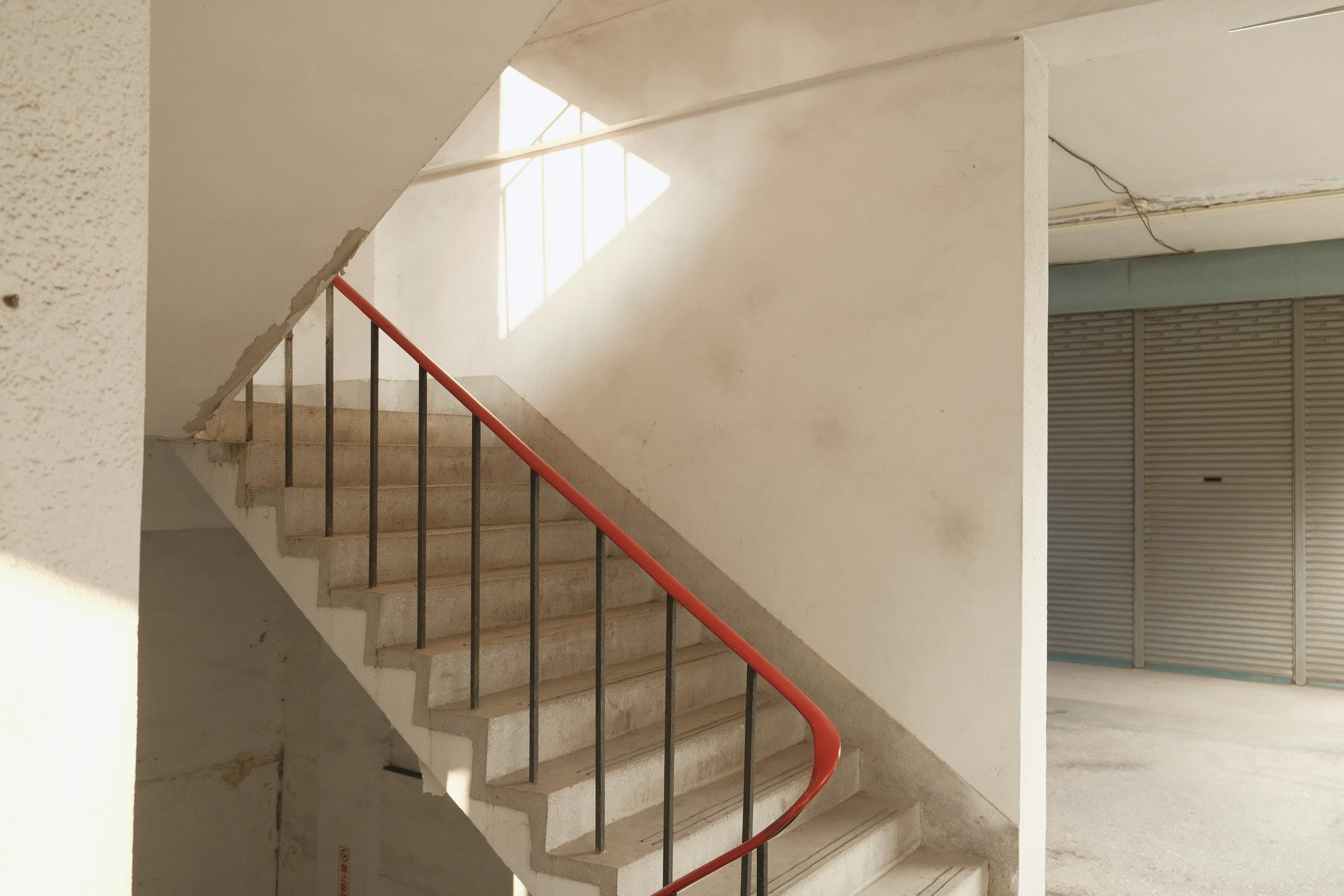
Exits (section 10). Exits and the routes leading to them must be kept clear. Nothing may be stored in exits or on the routes through lofts, basements and storage areas. The stairwell is an exit, so it is no place for prams, shoe racks or recycling bags.
Emergency access roads (section 11). Emergency access roads must be kept passable and unobstructed and be properly marked. No one may park on an emergency access road, even briefly, and in winter it must not be blocked by snow or ice.
Equipment (sections 12 and 13). Fire and safety equipment required by law or by the authorities, such as smoke ventilation equipment, exit route signs, emergency lighting and civil defence shelter equipment, must be kept in working order and properly maintained and inspected. Ventilation ducts must be cleaned so that they do not create a fire hazard.
Smoke alarms are the housing company’s responsibility
An amendment to section 17 of the Rescue Act (436/2023) transferred responsibility for acquiring and maintaining smoke alarms in apartments from residents to the owner of the building. The obligation came into force on 1 January 2026, after a two-year transition period. The housing company must ensure that every apartment has enough smoke alarms and that they are kept in working order. The resident’s statutory duty is to report a fault to the housing company without delay.
Under the Ministry of the Interior decree on smoke alarms (300/2025 (opens in a new tab), in Finnish), an apartment must have at least one smoke alarm for every 60 square metres or part thereof on each floor or level. The alarms are mounted on the ceiling at least 0.5 metres from the walls. The housing company or its representative has the right to enter the apartment when this is necessary to install or maintain the alarms. The visit is arranged at a time that suits the resident, within a reasonable period.
The housing company should agree who installs the alarms, how they are checked and how batteries and expired units are replaced. It is worth keeping a record of installations: the date, model and location. Residents are still recommended to press the test button regularly, although the law does not require it. If an alarm does not work, the resident must report it straight away. There is more on installation and the annual check on the smoke alarms page.
The rescue plan
Section 15 of the Rescue Act and Government Decree 407/2011 require a rescue plan for residential buildings with at least three apartments. In practice, almost every housing company with a block of flats or terraced houses must have one.
The plan assesses the hazards in the building and explains how they are prevented and what to do in an emergency. A document alone does not make a building safe: the plan has to reflect real conditions, be up to date and be known to residents. It is a good idea to display a summary in the stairwell and give it to new residents.
Practical checks
The following are recommendations, not statutory inspection intervals.
Stairwells and escape routes
Look at the stairwell through the eyes of someone trying to get out. Can you get out quickly even if smoke reduces visibility? Is there anything on the route that would slow people down or add to the fire load? Do the fire doors close by themselves, or have they been wedged open?
Basements, lofts and storage areas
Clutter easily builds up in shared spaces, and moving it from one space to another does not make anything safer. Clear rules are needed on what may be kept in shared spaces, and compliance needs to be monitored. Read more about keeping an eye on the loft and the basement.
Electrical and technical rooms
Electrical and technical rooms must be free of anything that makes it harder to reach the equipment. Unusual smells, signs of overheating and damaged equipment must be taken seriously, but electrical installations must never be investigated or repaired by residents themselves. The risks associated with distribution boards are covered in the article on electrical safety in a housing company.
Electric vehicle charging
Charging is not dangerous in itself when the charging system has been properly designed and installed. The risk comes from makeshift solutions, such as charging with an extension lead from an ordinary socket or from a car heater post that is not designed for a sustained heavy load. Charging points should be planned with an electrical professional.
What residents should do in a fire
If you discover a fire or smoke, warn others, call the emergency number 112 and leave by a safe route. Close the doors behind you so that smoke and fire do not spread. Do not use the lift.
If the stairwell is full of smoke, do not go out into it. Stay in the apartment, close the door, seal the gaps with wet towels, call 112 and go to a window or balcony where you can be seen. In a block of flats, an apartment that forms its own fire compartment often offers protection for a long time. It is worth going through these instructions in advance, because the first few minutes are crucial.
Checklist for the board
- Are the stairwells and other escape routes clear?
- Is the emergency access road marked, passable and clear all year round?
- Does every apartment have enough working smoke alarms, and are installations recorded?
- Is the rescue plan up to date and known to residents?
- Is there excess fire load in basements, lofts and storage areas?
- Are electrical and technical rooms tidy and locked?
- Do the fire doors, emergency lighting and first-aid firefighting equipment work?
- Has electric vehicle charging been set up properly?
- Have previously identified shortcomings been fixed?
The building, its residents and the way it is used all change, so the list is worth going through regularly, not just once.
Sources: Rescue Act 379/2011, Finlex (in Finnish) (opens in a new tab); Act amending the Rescue Act 436/2023, Finlex (in Finnish) (opens in a new tab); Ministry of the Interior decree on smoke alarms 300/2025, Finlex (in Finnish) (opens in a new tab); Ministry of the Interior: decree on smoke alarms (in Finnish) (opens in a new tab).
This article provides general information and does not replace case-specific legal or technical advice.