Your maintenance company: cooperation, reporting and tendering

In this article
The board can buy maintenance services from an outside company, but responsibility for making sure the upkeep of the property is organised stays with the board (the Limited Liability Housing Companies Act (opens in a new tab), chapter 7, section 2). The maintenance contract is therefore part of running the housing company, not just a purchase.
Maintenance sees what the board does not
Maintenance staff move around the property regularly; the board and the property manager do so far less often. Maintenance sees the condition of, and changes in, the technical spaces, the heat distribution room, the ventilation plant room, the yard, the stairwells and the rainwater systems.
Major damage is usually preceded by small signs: an emerging damp patch, a loosening handrail, a worn door closer, a strange noise from the ventilation unit or a rainwater gully starting to clog. A single observation does not always need an immediate repair. When it is recorded and passed on, the repair can be scheduled in a planned way.
Get more out of each visit
After a fault report, the caretaker usually fixes exactly the fault that was reported: the bidet shower is leaking, a stairwell light is out or the front door closer is not working. The work order is closed and the invoice goes out.
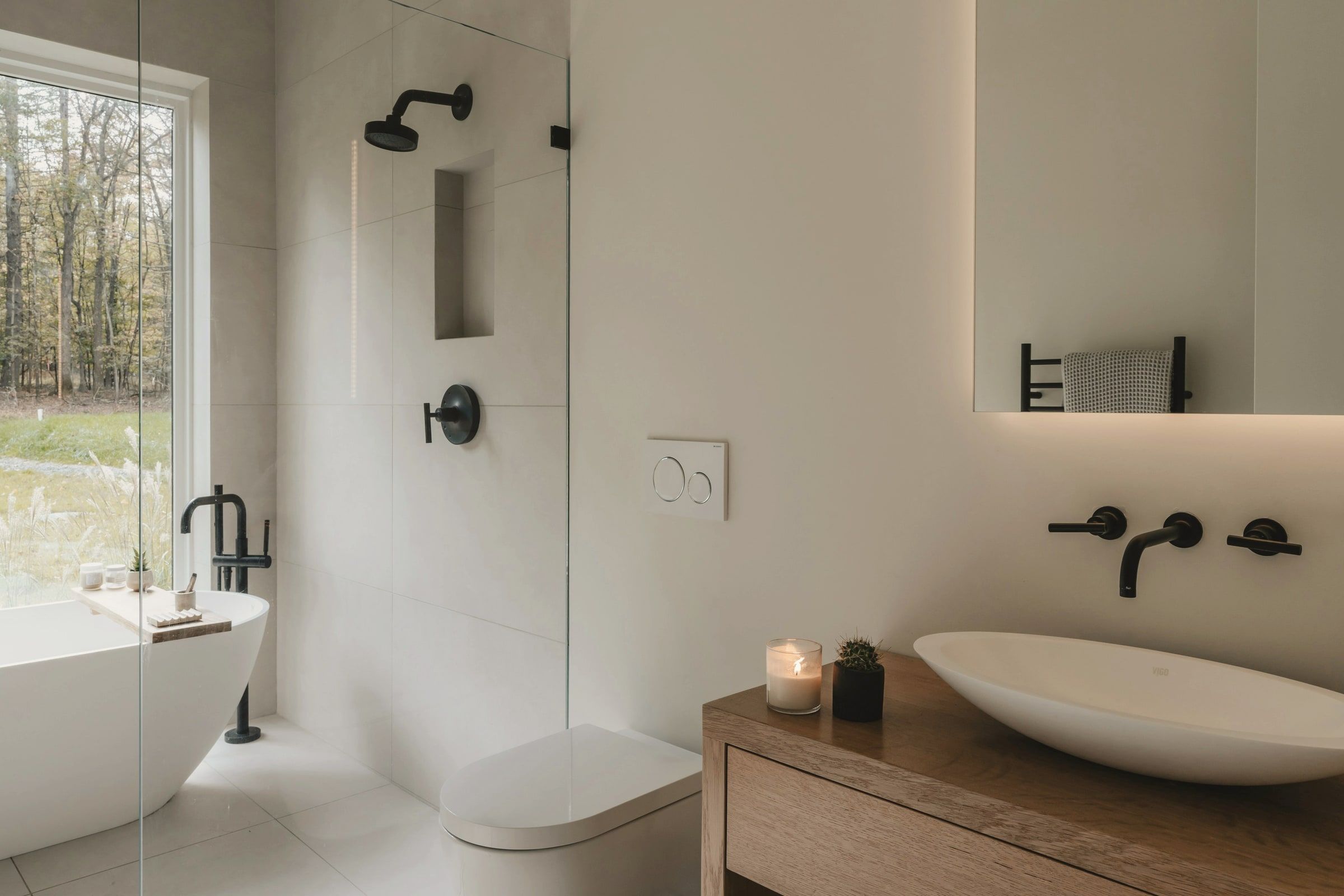
Depending on the contract, the price of a visit covers more than working time, for example travel, order handling, reporting and possibly a minimum charge. Since the visit is paid for anyway, it makes sense to increase its value. When the caretaker replaces a bidet shower in an apartment, they can take a couple of minutes to check whether there are signs of leaks under the washbasin, whether the toilet is firmly fixed, whether the silicone seals are intact, whether the shut-off valve closes and whether there is moisture around the floor drain. This is not a condition inspection; it is about getting as much information as possible from a visit that has already been paid for.
The same applies to shared spaces. A caretaker coming to change a light fitting walks through the main door, the yard, the stairwell and perhaps the basement corridor. On the way they may notice a detached gutter, a broken stair tread, a leaking outdoor tap, a fire door left open or a tilted yard light. No measuring equipment is needed, just the habit of looking around and recording what you see.
Reporting
A useful maintenance report briefly states what was done, what defects were found, how urgent they are and what is proposed next. A photo often helps. It is worth adding a standard item to the report: “Was anything else noticed during the visit that the board should be aware of?” This often captures an observation that does not appear in any fault report.
An example: the maintenance company clears a blocked floor drain. On the way out, the caretaker notices that the silicone seals in the bathroom are damaged and that there is darkening in the shower corner. The observation is recorded, the board asks for further investigation and the survey finds early damage to the waterproofing. The repair is carried out in a controlled way before moisture spreads into the structures.
An electronic maintenance log and fault reporting system keep the information with the housing company rather than in an individual employee’s memory. When the board or the maintenance company changes, the history is preserved. Read more about the housing company’s maintenance log (huoltokirja).
Observations for the maintenance needs report
At the annual general meeting, the board must present a written report on the maintenance needed over the next five years that will significantly affect living in the building or costs (chapter 6, section 3). A good maintenance needs report (kunnossapitotarveselvitys) relies on exactly the information gathered from maintenance, condition assessments and monitoring of the building. Many companies also draw up a longer-term maintenance plan (PTS). It is not required by law, but it helps the company prepare for major repairs in good time.
The board’s part in the cooperation
The board can make cooperation easier by:
- agreeing clearly what the maintenance contract covers and what is ordered separately
- writing into the contract what maintenance is expected to look at during visits and how observations are reported
- naming who receives and handles the observations from maintenance
- going through recurring faults with maintenance, for example once a year
- inviting a maintenance representative to join the building walk-through.
Regular maintenance does not see everything. Apartments contain parts that are the housing company’s responsibility, such as floor drains and pipe supports, which maintenance usually only gets to see on the basis of a fault report. It makes sense to check them in all apartments at once, for example during an apartment round.
When to put the contract out to tender
The law does not set a tendering interval. Even a long partnership can work well, but the content of the service, prices and the housing company’s needs change. Often the first step is a review discussion with the current maintenance company. The contract should be reviewed at least if
- the same faults are repaired again and again, or agreed work is left undone
- communication is slow, even though a fast response is essential for water damage, gritting and safety matters
- the price goes up but the service does not improve
- the contract is old and does not take into account things such as charging points, new systems or electronic fault reporting.
Tendering does not automatically mean switching, and it is not a sign of mistrust. It shows what is available on the market and at what price. If the current partner is still the best, the cooperation can continue on clearer terms. Check the notice period of the current contract so that you can time the tendering sensibly.
Request for quotation and comparison
Quotes are only comparable if everyone receives the same, sufficiently detailed request for quotation. Usually the property manager prepares the request and the comparison, and the board decides on the contract as part of organising the upkeep of the property. In the request, define at least:
- which services are included in the monthly price and which are invoiced separately
- acceptable response times and how the on-call service is arranged
- how maintenance visits and observations are reported
- how delivery of the service is monitored during the contract period.
The lowest monthly price is not always the best value overall. If the base price covers little or extra work is expensive, a cheap quote can end up costing more over a year than a competitor’s slightly higher price. So also compare the pricing of extra work and call-outs, the skills and continuity of staff, reporting, and references from properties of a similar size. Ask every bidder how they organise preventive maintenance and how observations are passed on to the board. Comparing quotes more generally is covered in the article on competitive tendering in a housing company.
Once the contract is signed, quality is monitored through maintenance reports, response times, resident feedback and an annual review meeting. That way shortcomings are tackled in time, and board meetings are not taken up by repeated complaints.
Frequently asked questions
Who decides on changing the maintenance company?
The maintenance contract is usually within the board’s decision-making powers as part of organising the upkeep of the property. The property manager often prepares the request for quotation and the comparison.
How often should the maintenance company be put out to tender?
There is no fixed interval. The contract should be assessed regularly, and at the latest when quality declines, prices rise noticeably or needs change.
Why are the maintenance company’s observations important?
Maintenance moves around the building regularly and can notice emerging faults before they turn into damage. Recorded observations support planned maintenance and the maintenance needs report.
Sources
This article provides general information and does not replace case-specific legal or technical advice.