The building walk-through: how the board inspects the building
In this article
A leaking downpipe, a new crack in the facade, a sunken rainwater gully or a damp mark on the basement wall do not show up in financial reports or minutes. They are spotted on site. On a building walk-through (rakennuskierros), the board goes round the building together and forms a shared picture of its condition.
The walk-through supports the board’s statutory duties
The Limited Liability Housing Companies Act (asunto-osakeyhtiölaki) does not require a building walk-through, nor does it say how often the building should be inspected. The board must, however, ensure that the property is properly maintained and present a written report on maintenance needs for the next five years to the annual general meeting every year (Limited Liability Housing Companies Act (opens in a new tab), in Finnish, chapter 7, section 2 and chapter 6, section 3). Neither is possible without sufficient information on the building’s condition, and a walk-through is a simple way of gathering it.
Around the meeting table, the building is seen through reports. When members see something for themselves, the discussion about how urgent a repair is becomes more concrete. A walk-through also raises questions that would not come up at a meeting: when was this last inspected, has anything been noted about it before, and should it be investigated further?
What to look at on the walk-through
The building’s age, structures, location and previous repairs all affect where attention should be focused. In most housing companies, the following are a good starting point.
Roof, eaves and loft
Even a small leak can lead to extensive moisture damage in the roof structure and in the apartments. Going up on the roof is a job for a professional with the proper safety equipment. A lot can be seen from the ground and from the loft:
- loose flashings, visible damage and worn seams
- the condition of gutters and downpipes, and any blockages
- damp marks in the loft and around roof penetrations.
You will find more tips in the article the housing company loft.
Facade and balconies
The building envelope is constantly exposed to the weather. Look for crumbling, cracks, worn coatings, the condition of the joints and visible changes in the balconies. Record your observations even if their significance is not yet known.
Yard, plinth and perimeter drains
Poor drainage is a common cause of moisture problems in basements and foundations. The yard is best looked at during or just after rain:
- Does water pool next to the building?
- Does the ground slope away from the wall?
- Do the downpipes carry water well away from the plinth?
- Is there new darkening or crumbling on the plinth?
You cannot see whether the perimeter drains are working. If there is standing water in the inspection chambers or recurring moisture in the basement, it is worth having the drains investigated.
Basement and technical rooms
The basement is the part of the building most exposed to moisture, and problems often show there before they appear in the apartments. Look out for wet surfaces, new damp marks, white salt deposits, leaking pipes and condensation. A stuffy or changed smell is often the first sign of a hidden problem. Under the Rescue Act (pelastuslaki), nothing may be stored in basement passageways, so check at the same time that the corridors are clear. Read more about keeping an eye on the basement.
The heat distribution room, the ventilation plant room and the main electrical switchroom are easily overlooked. You can visually check tidiness, signs of leaks, moisture and unobstructed access. Actual electrical and HVAC inspections are a job for a qualified professional.
Stairwells
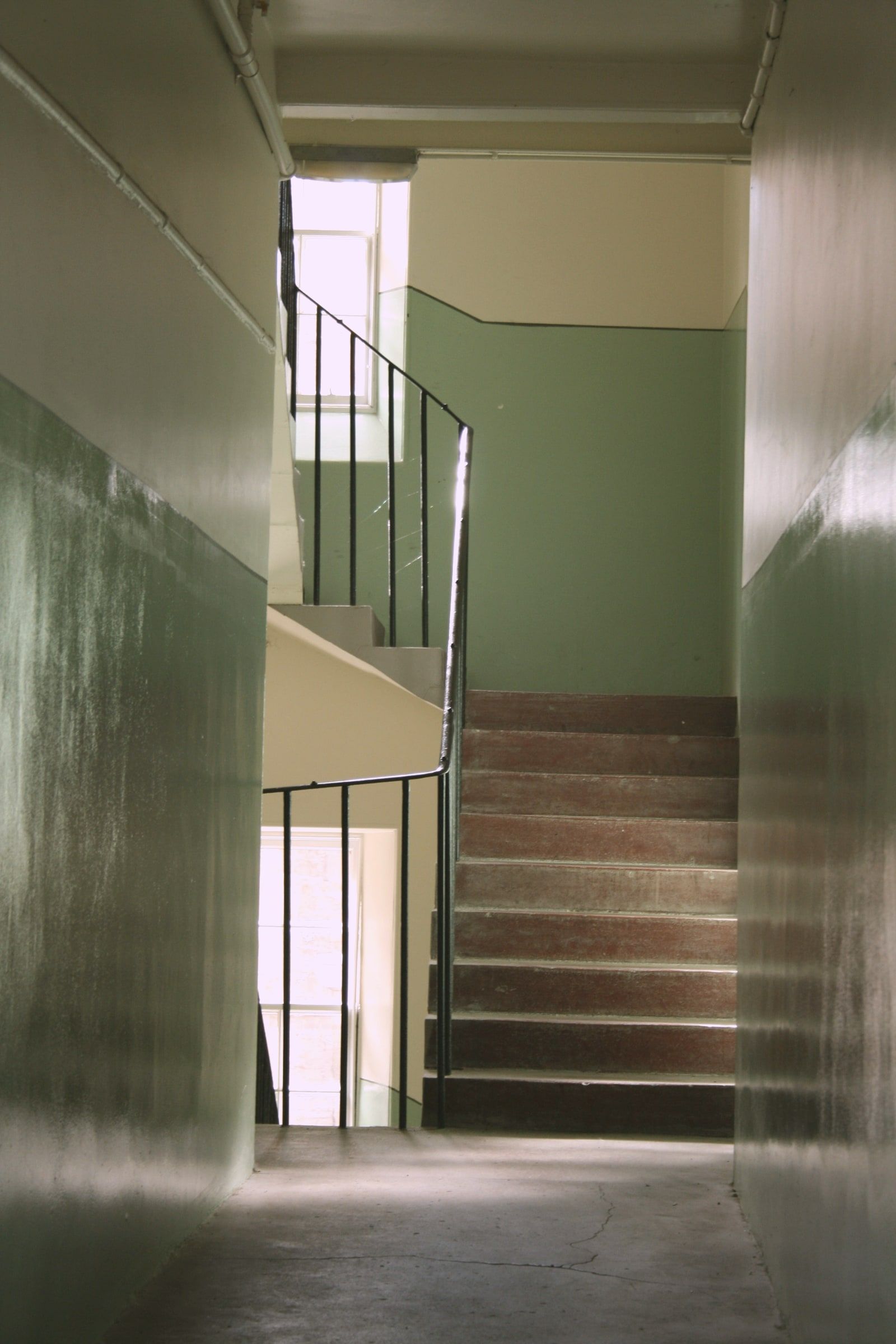
The first signs of structural movement and water leaks show up in the stairwell. Keep an eye on cracks in walls and ceilings, water marks, and blistering or discoloured paint. A crack may be caused by the normal movement of the structure, but a crack that is widening or has moisture around it should be shown to an expert. Check at the same time that escape routes are unobstructed and fire doors close.
Windows
In the windows of the common areas, and looking from outside, keep an eye on draughts, the condition of seals, rot in the sashes and flaking paint. Condensation between the panes often indicates that the inner sash seals are not holding. Condensation on the inner surface of the inner pane usually points to high indoor humidity or poor ventilation. From 1 October 2026, the company is responsible for windows as a whole, unless the articles of association provide otherwise; see the change in responsibility for windows.
Record observations straight away
A walk-through is only useful if the observations are kept. Note the date, the participants, the observation and its exact location, a photo, any follow-up investigation, the person responsible and when the matter will be revisited. When the same spot is checked on the next walk-through, any change is easy to see.
The observations are discussed at the next board meeting: are further investigations needed, should the maintenance plan be updated, and does anything affect the budget? Collected in the maintenance log (huoltokirja), they are also available to the property manager and the maintenance company, and they feed into the maintenance needs report and the fault history. The next board can see how the condition has been monitored.
Practical recommendations
The following are practical recommendations, not legal requirements.
Do a walk-through at least once a year. Spring and autumn are good times, as that is when the flow of rainwater and the marks left by winter are easiest to see. A walk-through is also worthwhile before major repair decisions. The maintenance company can do a lighter round more often, for example at the change of seasons.
Bring the whole board. One person notices the flow of rainwater, another the facade, a third anything unusual in the technical rooms. If needed, you can also invite the property manager, a representative of the maintenance company or another expert.
Do not draw technical conclusions without an expert. A walk-through does not replace a condition assessment, a condition survey or statutory inspections. Its job is to identify observations. If something unusual is found, the next step is to commission a closer investigation.
Remember the apartments. From outside and from the common areas, you cannot see the condition of the floor drains, pipe supports or smoke alarms in the apartments. For those, you need an apartment round.
Frequently asked questions
Is a building walk-through required by law?
No, but it supports the board’s statutory duties, such as organising property maintenance and preparing the maintenance needs report.
Does a building walk-through replace a condition assessment?
No. A walk-through is a visual check. Condition assessments and condition surveys are carried out by qualified experts.
This article provides general information and does not replace case-specific legal or technical advice.