Housing company ventilation: responsibilities, upkeep and advice
In this article
You can tell that ventilation is working when you don’t notice it: the indoor air is fresh, the bathroom dries after a shower and the windows stay clear. When an apartment starts to feel stuffy or the windows mist up, the cause may be the ventilation, or something else entirely.
Why ventilation also matters for the building
Ventilation brings in outdoor air and removes moisture, carbon dioxide, odours and other impurities. Every home produces water vapour every day from showering, cooking, drying laundry and breathing. If the moisture is not removed, it puts strain on the structures and over time increases the risk of moisture and microbial damage.
A block of flats may have natural (stack effect) ventilation, mechanical extract ventilation, or mechanical supply and extract ventilation. Older buildings often have natural ventilation or mechanical extract, newer ones mechanical supply and extract ventilation with heat recovery. The system may have been changed during renovations, so the year of construction does not necessarily tell you the current situation. The board should therefore start by finding out what kind of system the building has now.
Who is responsible
Under chapter 4, section 2 of the Limited Liability Housing Companies Act (asunto-osakeyhtiölaki, 1599/2009), the company is responsible for maintaining the building’s core systems, including where they run through the apartments. The Act specifically mentions heating, electrical, data transmission, gas, water, drainage and ventilation systems. The responsibility covers systems that the company has installed or accepted as its responsibility, and the articles of association can provide otherwise.
The shareholder must take good care of their apartment and notify the company without delay of a fault that the company is responsible for repairing (chapter 4, sections 3 and 8). A change that affects ventilation, such as replacing a cooker hood or connecting an appliance to a duct, must be notified to the company in advance. If the shareholder has installed, for example, an apartment-specific ventilation unit or cooker hood fan themselves, its maintenance is in principle their responsibility. From 1 October 2026 this is stated explicitly in the Act (chapter 5, section 1).
The board does not need to know how to adjust a ventilation unit, but it must make sure maintenance is organised: how the system is serviced, when it was last examined and whether any problems have been found. When this information is recorded in the maintenance log (huoltokirja) and the annual maintenance plan, it is preserved when the board changes.
Can residents adjust the vents?
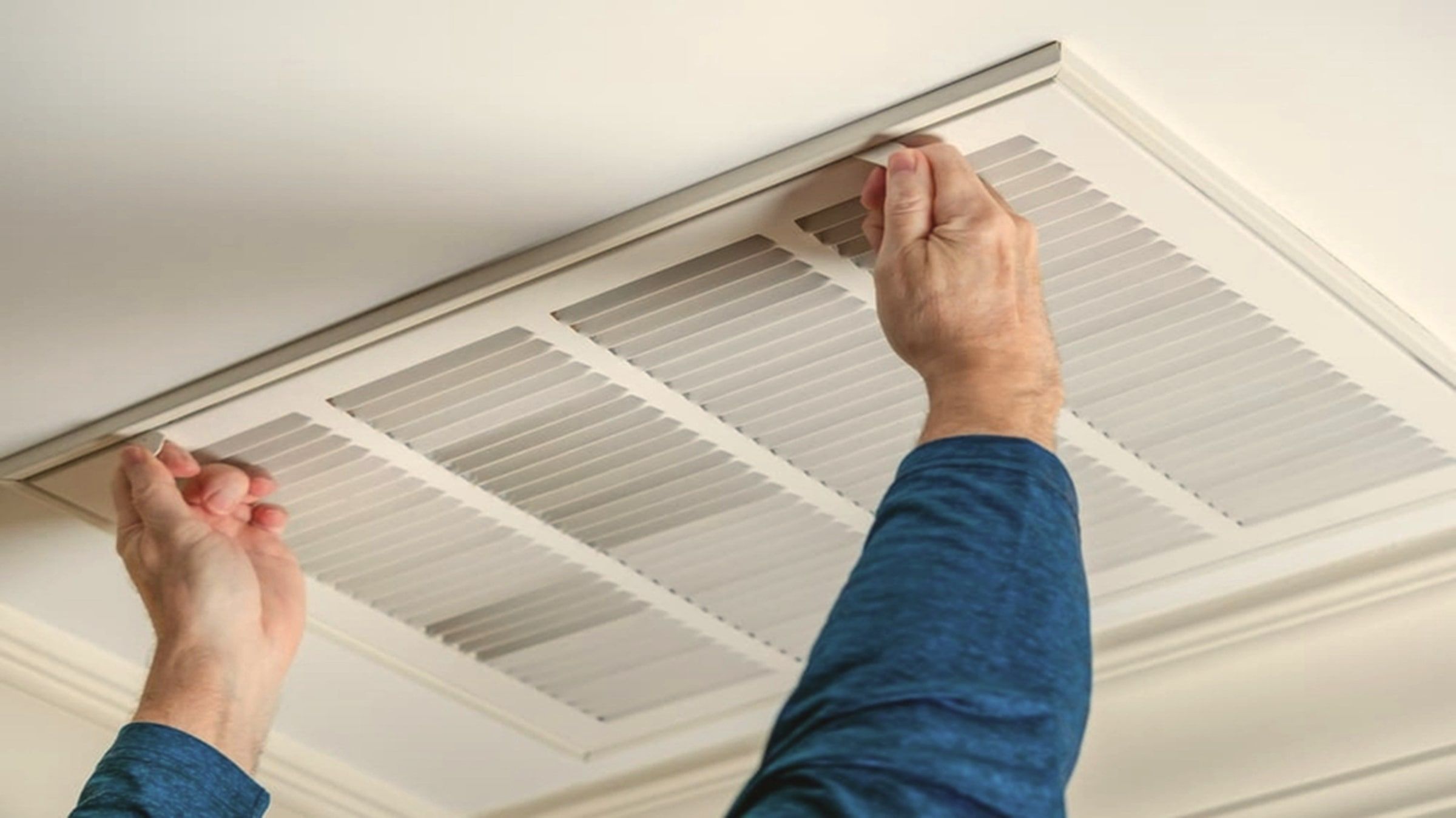
In a mechanical ventilation system, the vents are adjusted so that the designed air flows are achieved throughout the building. Changing the position of one vent can weaken the ventilation next door, and a blocked vent disrupts the whole system.
According to guidance from Motiva (opens in a new tab) (in Finnish), the Finnish state-owned sustainability agency, the housing company is responsible for the basic adjustment of ventilation in a block of flats. The resident’s tasks relate to use, such as the summer and winter positions of the supply air vents. You may clean a vent, but you should not change its setting. If the ventilation does not seem to be working properly, it is best to report it to the property manager or the maintenance company.
In extract and natural ventilation, replacement air is important. If the replacement air vents are closed or missing, air comes in uncontrolled through gaps in the structures, the letterbox or the front door. This is felt as a draught and impairs both living comfort and the way the building functions.
Signs you should react to
Ventilation problems usually show up first in residents’ daily lives:
- the indoor air is constantly stuffy or cooking smells linger for a long time
- the windows repeatedly mist up on the inside
- the bathroom is slow to dry or the mirror stays steamed up long after a shower
- you can smell the neighbours’ cooking or cigarette smoke in your own apartment, which may point to pressure differences
- vents get dirty quickly or more dust than usual builds up
- the ventilation makes unusual noises, there is a draught or the letterbox and front door behave strangely
A single observation may also be down to how people live or a cold surface. If similar observations come from several apartments, the cause is worth investigating. If, for example, the bathroom floor in many apartments stays wet for a long time after a shower, the extract air flow may have weakened. The cause may be a clogged vent or incorrect adjustment, and once the air flows are corrected the rooms dry normally again.
Maintenance and service intervals
According to Motiva’s guidance, the filters in mechanical ventilation are changed once or twice a year and the supply and extract air vents are cleaned at least twice a year. The heat recovery cell is vacuumed every year and washed every few years. The need for duct cleaning and air flow adjustment depends on the building and is set out in the maintenance programme.
Dirty filters and vents gradually reduce the flow, and the fans have to work harder. The change is so slow that it may go unnoticed until the indoor air has clearly deteriorated. That is why maintenance should follow a plan rather than wait for symptoms. The filters in apartments’ fresh air vents are easily forgotten. It makes sense to change them in all apartments at once so that none are missed. Huoneistokierros does this as part of the apartment round.
Under section 13 of the Rescue Act (pelastuslaki, 379/2011), the building owner must ensure that ventilation ducts and equipment are serviced and cleaned so that they do not cause a fire hazard. Cleaning alone does not fix how the system works, however: if the air flows are wrong, the system will perform poorly even after cleaning. Cleaning and adjustment are best done at the same time, with the air flows measured at the end. The division of work between the maintenance company and residents should be clearly agreed and explained to residents.
The highest possible air flow is not the best. Ventilation that is too strong increases heating energy consumption, while ventilation that is too weak impairs indoor air and allows moisture to build up. Mechanical ventilation should not be switched off to save energy. Savings come from correct settings, regular maintenance and demand-based use.
When problems keep recurring
If the same problems keep coming back, cleaning the vents may not be enough. Depending on the situation, you may need air flow measurement and adjustment, a condition survey of the ventilation or another expert investigation. Ventilation is best looked at together with heating, windows and structures, because a building’s moisture performance depends on all of them together. See also moisture problems in a housing company.
The heating season often reveals shortcomings most clearly. With the windows closed, the moisture from everyday living stays indoors, and misting, draughts and stuffiness become more noticeable.
Common mistakes include brushing aside residents’ indoor air observations, postponing filter changes from year to year, not measuring air flows after cleaning and repairs, and turning down the ventilation in the name of energy saving without an expert assessment.
Checklist for the board
- What ventilation system does the housing company have?
- When were the filters last changed and the unit serviced?
- When were the ducts cleaned and the air flows measured?
- Is there a maintenance programme for the system, and is the division of work with the maintenance company clear?
- How have residents been advised on using the ventilation?
- Have there been recurring reports from apartments?
If you cannot find the answers, the first step is to gather the facts, not to buy a new device. Other things to check in autumn are covered in the article on autumn maintenance in a housing company.
Sources: Limited Liability Housing Companies Act 1599/2009, Finlex (in Finnish) (opens in a new tab); Rescue Act 379/2011, Finlex (in Finnish) (opens in a new tab); Motiva: Ventilation at home (in Finnish) (opens in a new tab).
This article provides general information and does not replace case-specific legal or technical advice.