Water damage in a housing company: risks, prevention and liability
In this article
Water damage is among the most common and most expensive types of damage in housing companies. Little of it happens in an instant: most often water gets into the structures from a small leak that has gone on for weeks or months before anyone notices. By then much more than the leaking pipe needs repairing, including structures, surfaces, drying and sometimes temporary accommodation for the resident. The extent of the repair depends on how quickly the damage is detected, so prevention comes down to identifying the risk points in time.
Where damage starts
There are usually several small things behind it rather than one big mistake. Typical sources include:
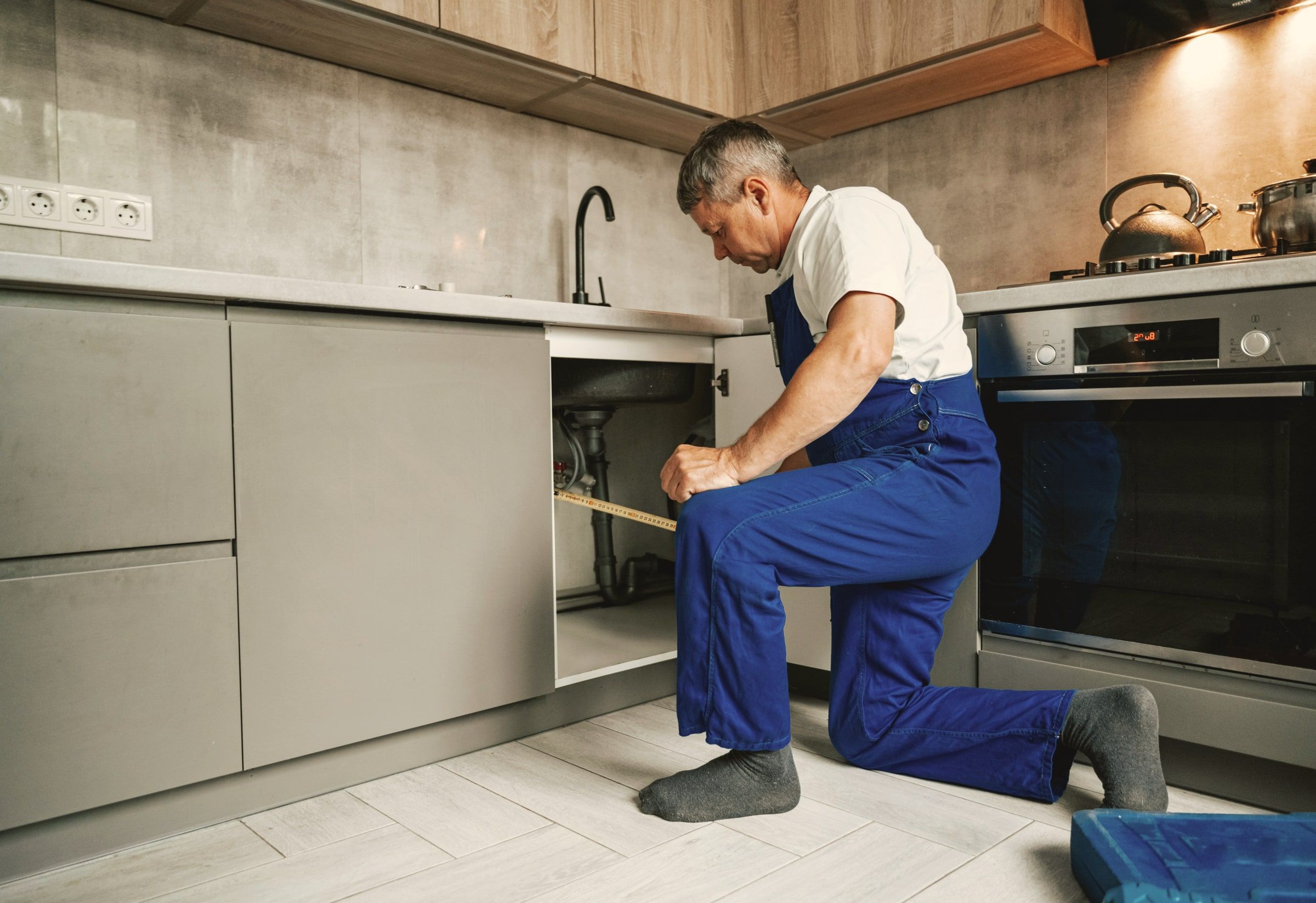
- pipe joints in the kitchen and bathroom
- dishwasher and washing machine hoses and connections
- floor drains that are blocked or whose connection to the waterproofing fails
- poorly supported pipes whose joints come under strain
- outdated waterproofing in wet rooms or a cracked silicone seal
- a leaking toilet flush mechanism
- roof penetrations and blocked roof drains
Much damage progresses behind walls, in floor structures or under kitchen units, where it cannot be seen without a closer investigation. The building’s age, materials and earlier repairs determine which points are most at risk in your particular building.
Early signs
Report it to the housing company if you notice:
- an unusual or musty smell
- moisture marks, darkening, or blistering or peeling paint
- swelling parquet, loose skirting boards or tiles
- repeated dripping under units
- a slow-draining floor drain
Under chapter 4, section 8 of the Limited Liability Housing Companies Act, a shareholder must notify the company without delay of a fault that the company is responsible for repairing. The signs of slowly developing moisture are described in more detail in the article on moisture problems in a housing company.
Maintenance staff move around the building more often than the board or the property manager and may notice early moisture marks, leaking valves, unusual water consumption or blocked rainwater gullies. A good maintenance company also reports things that could later lead to damage. Maintenance staff cannot see into the apartments without a separate visit, however, so the condition of floor drains and pipe supports can only be established by going through the apartments. When the inspection is done in every apartment at once, you can also see whether findings recur in the same riser or part of the building. More on this in the article on the apartment round in a housing company.
Prevention is the most effective protection
Not all damage can be prevented, but the risk can be reduced significantly:
- regular inspection and cleaning of the roof and rainwater systems
- cleaning and checking the condition of floor drains in the apartments
- checking pipe supports and visible joints
- a condition survey of the domestic water and drainage networks as needed
- monitoring the condition of wet rooms and the age of their waterproofing, and supervising shareholders’ renovations
- instructions for residents: washing machine hoses, turning off taps and reporting leaks immediately
- recording maintenance findings and updating the maintenance plan
Under chapter 7, section 2 of the Limited Liability Housing Companies Act, the board sees to the proper organisation of the upkeep of the property and buildings. As far as water damage is concerned, this means that the condition of the pipework, wet rooms and roof is monitored and that upcoming pipe and roof repairs are included in the maintenance needs report (kunnossapitotarveselvitys). The service life of pipework varies with the material, water quality and use. Reaching the end of its service life does not mean a leak, but the risk increases, and recurring leaks are a clear sign that the condition needs to be investigated.
What damage costs
The costs are not limited to repairing the pipe. Direct costs include a moisture survey, drying, demolition work and renewing structures. Residents suffer disruption, and at worst the apartment is unusable for weeks. If moisture remains in the structures, the result can be microbial damage and an indoor air problem.
Insurance does not necessarily cover everything. The insurer assesses the damage on the basis of the policy terms, and compensation is affected by the cause of the damage and whether it was sudden, the maintenance of the building, age deductions and the excess. A slowly developing leak or neglected maintenance can limit compensation. Maintenance reports, inspection records, condition surveys and repair documents are worth keeping, because they show how the property has been looked after. More in the article on housing company insurance.
Who is responsible for water damage?
Responsibility depends on the cause of the damage, the law, the articles of association and the policy terms:
- The company is responsible for structures, insulation, and water, drainage, heating and other main systems (chapter 4, section 2). If the inner parts of an apartment are damaged because of a fault in a structure or system that the company is responsible for, or because of repairing it, the company repairs them to the basic standard of the time.
- The shareholder is responsible for the inner parts of their apartment and must look after it carefully so that the parts the company is responsible for are not damaged (chapter 4, section 3). If the damage is caused by the shareholder’s own appliance, such as a washing machine hose, responsibility may lie with the shareholder. From 1 October 2026, the shareholder is also responsible for maintaining alteration work they have carried out and for any additional maintenance costs arising from it.
- Liability for damages. If a shareholder breaches the provisions on maintenance or alteration work and thereby causes damage, the damage is deemed to have been caused through negligence, unless the shareholder shows they acted with due care (chapter 24, section 2).
Situations that look the same can therefore end up differently. The articles of association and the Finnish Real Estate Federation’s (Kiinteistöliitto) division of responsibilities table help draw the line. Read more in the article on the division of responsibilities in a housing company.
When damage occurs
- Cut off the water supply if possible, for example at the appliance’s or the apartment’s shut-off valve.
- Report it immediately to the maintenance company’s emergency line or to the property manager. If water is running into the apartment below, warn the neighbour too.
- Dry up the visible water and photograph the situation.
- Notify your own insurer. The housing company handles the claim under its property insurance.
- Do not start demolition or repair work before responsibility and coverage have been established, unless it is needed to prevent further damage.
If water has got into electrical equipment or electrical rooms, do not touch them.
Frequently asked questions
What are the most common causes of water damage?
Leaks in domestic water and drainage pipework, shortcomings in wet room waterproofing and floor drains, household appliance connections, roof leaks and problems with rainwater systems.
Who is responsible for water damage in a housing company?
It depends on the cause of the damage. The company is responsible for structures and main systems, the shareholder for the inner parts of the apartment and for using it with care. Final responsibility is decided case by case on the basis of the law, the articles of association and the policy terms.
How can water damage be prevented?
Through regular inspections, maintenance of floor drains and pipe joints, recording maintenance findings and planning repairs at the right time. Huoneistokierros goes through the floor drains and pipe supports of the whole building in one go, at a fixed price.
Source: Limited Liability Housing Companies Act 1599/2009, Finlex (in Finnish) (opens in a new tab).
This article provides general information and does not replace case-specific legal or technical advice.